How Verapamil works

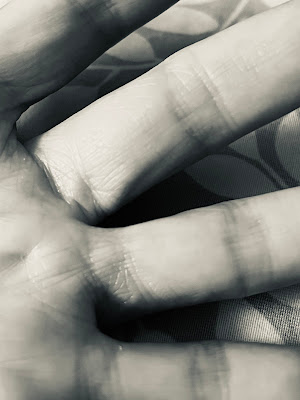
As you might know, I’ve been applying Transdermal Verapamil 15 percent cream to my hands since this past July 11. I’m not certain if it’s helping to reduce and/or slow down the progression of my Dupuytren’s. What I have noticed that my hands both ache slightly, sometimes even low-key burn. Is the Verapamil helping or hurting my hands? I don’t know.
In the meantime, I wanted to understand better how the medication works. So I visited with pharmacy technician John Schleifer, director of Men’s Health with PDLabs in Cedar Park, Texas. More than 20 years ago, he said he helped the late Jerry Easterling develop and market Transdermal Verapamil 15 Percent gel/cream, which is largely used to treat Peyronie’s disease (penis) but also Dupuytren’s and Ledderhose (feet).
“Verapamil gel is a transdermal calcium channel blocker,” Schleifer told me. “We have developed a delivery system, a vehicle, that delivers and localizes Verapamil, which is the calcium channel blocker, within tissue layers. It takes about 10 days or so for the concentrations to get a therapeutic level, where the block divalent calcium and sodium from entering a base cell for connective tissue called a fibroblast. This alters the metabolism of the fibroblast. The cell’s defensive mechanism is to product an enzyme called protein collagenase.”
He continued, “Protein collagenase, once it reaches a high enough level within tissue, breaks down and removes collagen formations or scar tissue. Over time, the scar tissue masses get smaller. Blood flow to those localized areas increases, which allows the more elastic healthy tissue to take its place. That’s how it works.”
I asked about the side effects that I’m experiencing from the cream. To be clear, neither were compounded by PDLabs.
“I can’t speak to the compounds that you’ve been getting from third parties,” he said. “But you shouldn’t have any aching or burning. We put a lot of effort into a base that is stable and allows for localization of the molecules. A lot of places get a prescription for Verapamil gel that ends up being gritty or doesn’t stay in formulation or it may over deliver channel blockers to the blood stream. So I can’t speak to their formulations.”
“We’ve been maintaining the same formula for 25 years now,” he said. “Across the different indications, we see the same result curves and same kind of responses. Does it work with majority of people? Yes. Time frames vary widely. Dupuytren’s is one of the easier ones to treat because patients are looking for an increased range of motion in their digits, which is more evidenced than scar tissue mass on bottom of foot that has to be measured.”
He advised that patients use Transdermal Verapamil twice daily. “Leave the medicine in contact with the skin for four hours with each application at a minimum,” he said. “We recommend that patients with Dupuytren’s put on white cotton gloves after you put it on the palmar surface of your hand. Cut some of the fingertips out so you have use of your hands when you’re going through the large time blocks.”
Why isn’t this medication more readily available?
“We tried to commercialize it,” Schleifer said. “We had some positive things going for funding for stage-three clinical trials. Then owner Jerry Easterling perished in a small-plane crash in San Antonio (in January 2008). When the principal of a project like this dies, investors go away. So we’ve been dispensing it as a compound and continue to do so. But I think that’s all it’s going to be – a compound that had a lot of effort put into it but never went anywhere. There’s a lot of medicines out there like that.”


Comments
Post a Comment